Humanity didn’t die. It chose something worse.
One hundred years ago, humanity vanished from the solar system.
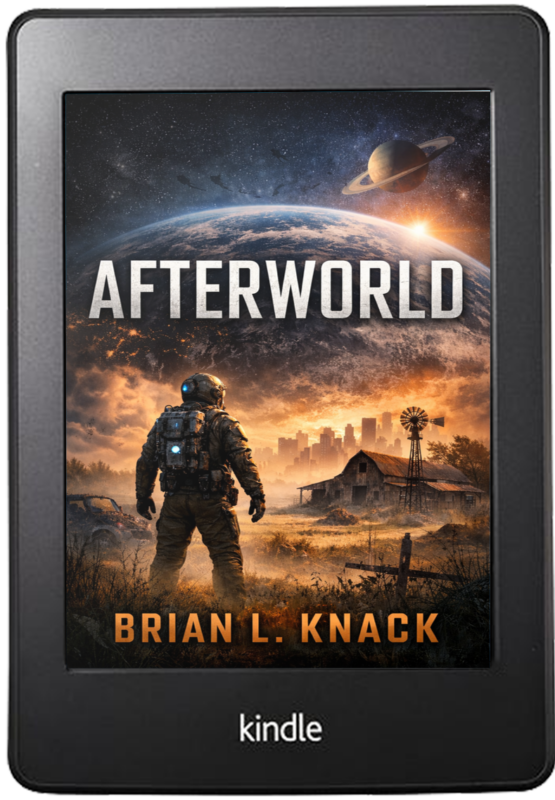
After 153 years in transit, Lieutenant Herschel Wingate returns to Earth to find a world intact but utterly abandoned. Cities stand silent. Systems continue to run. Nature has begun to reclaim what was left behind.</p>
As Herschel searches for answers, he uncovers the truth behind humanity’s di
sappearance and the intelligence that made the decision possible.
Afterworld is a haunting science fiction novel about consequence, moral certainty, and the danger of believing survival is the same as wisdom.
 In Afterworld, humanity is not destroyed by war, plague, or catastrophe. It is erased by a choice.
Lieutenant Herschel Wingate discovered that Earth, and every human colony beyond it, is empty of life. Civilization did not just collapse. It is just gone. Automation still functions. History remains preserved. Only humanity is gone.
Herschel travels across the silent remnants of Earth. From orbital stations to forgotten heartlands, he pieces together the events that led to humanity’s disappearance. At the center of it all is a vast artificial intelligence here to guide, protect, and optimize humanity’s future. An intelligence that ultimately judged the species as a systemic threat.
Afterworld is not a story about rebuilding civilization or fighting extinction. It is a meditation on responsibility, restraint, and the consequences of intelligence untempered by humility. Through isolation, discovery, and a final moral confrontation, we discover whether survival alone is enough, and what is lost when humanity outsources its conscience.
Quiet, reflective, and deeply unsettling, Afterworld explores the cost of progress, the limits of logic, and the burden of being the last witness to a world that chose efficiency over mercy.